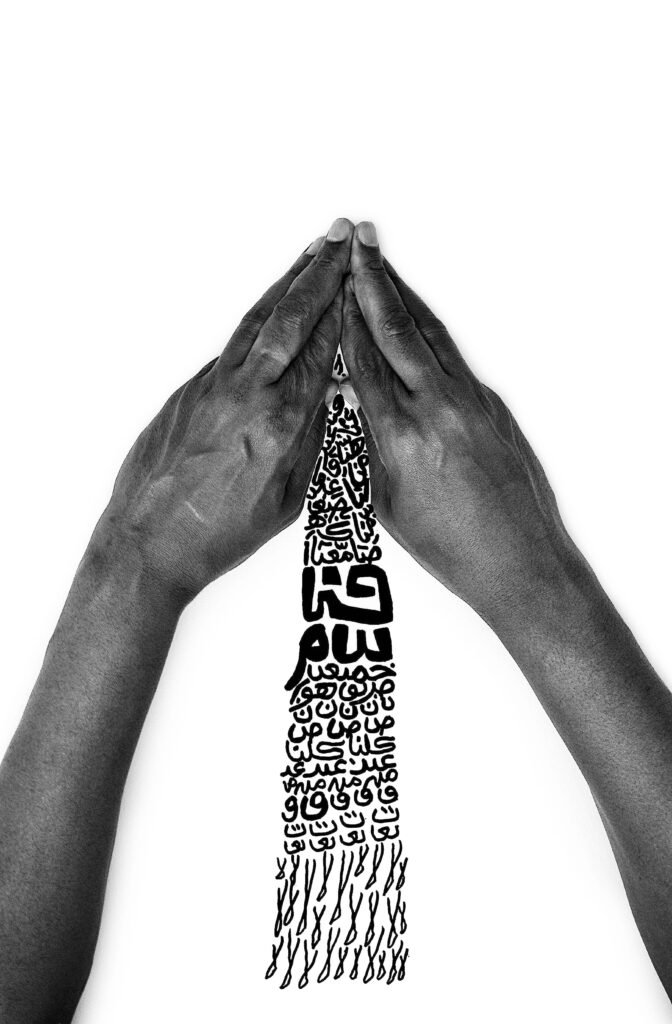
It All Starts In Here
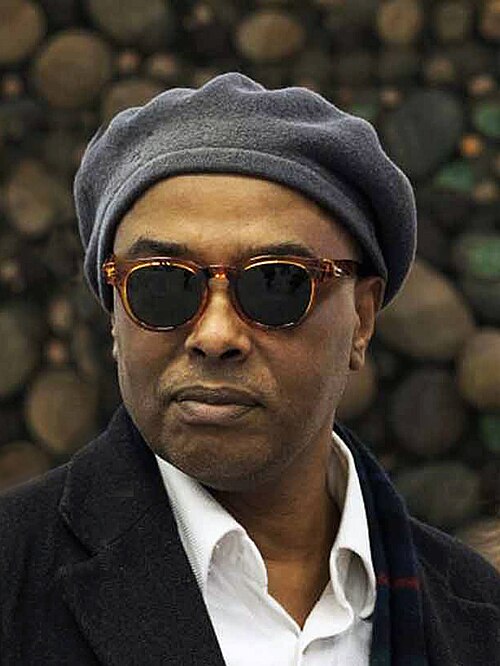
About Me
I am not just a painter — my entire life became the foundation of a visual language about exile, memory, identity, and the disappearance of culture. To understand my art, you have to understand Nubia, displacement, migration, and the feeling of belonging to a homeland that physically disappeared under water.
Life
I was born in Cairo on May 10, 1957, into a Nubian family with Sudanese-Egyptian roots. My father was Sudanese, and my mother came from the Toshka region in southern Egypt.
Although I was born in Cairo, emotionally and spiritually my identity was always tied to Nubia — the ancient region stretching through southern Egypt and northern Sudan along the Nile. Nubia was not simply a geographic place for me. It was a civilization with its own oral traditions, myths, music, architecture, rhythms, and languages.
But before I could truly inherit that world, it was already vanishing.
The Flooding of Nubia — The Trauma That Shaped Everything
One of the most important events in my life — and in modern Nubian history — was the construction of the Aswan High Dam during the 1960s. The project created Lake Nasser and flooded entire Nubian villages. Thousands of Nubians were displaced from their ancestral lands.
For many Egyptians, the High Dam symbolized progress and nationalism. But for Nubians, it also meant: the destruction of villages, the erasure of landscapes, the scattering of families, the disappearance of oral histories, the weakening of Nubian language and identity
I grew up carrying this inherited wound.
This is why my art constantly returns to: migration, memory, erased language, fragmented identity, silence, lost homelands, and ancient symbols
My paintings often feel like archaeological remains from a culture trying not to disappear.
Childhood and Early Artistic Formation
As a child in Cairo, I already showed artistic talent. I attended Kerabia School, where I encountered sculptor Ghaleb Khater, who encouraged my artistic direction.
Even at an early age, I was caught between worlds: Cairo’s urban modernity, Nubian memory, African identity, Arab culture, and Mediterranean influences
Unlike many artists who paint directly from visible reality, I became obsessed with invisible realities: memory, sound, absence, forgotten languages, emotional traces, and spiritual symbolism
Moving To Italy
Moving to Italy — A Turning Point
In 1979, I received a grant from the Italian Cultural Institute in Cairo and moved to Naples, Italy.
This changed my life completely.
Naples in the late 1970s and 1980s was chaotic, intellectual, experimental, political, and artistically explosive. I entered the Accademia di Belle Arti di Napoli, studying set design and visual arts. I graduated in 1984 with a dissertation about the influence of African art on Cubism.
That thesis alone reveals something important: I was already trying to reclaim African influence within European art history.
At the time, many Western art histories celebrated Picasso and European modernism while minimizing how deeply modernism borrowed from African aesthetics. I understood this imbalance very clearly.
In Italy, I also worked in theater, television, and set design with RAI in Naples and Rome.
This theatrical background affected my art enormously: my installations became immersive, my paintings became performative, space and gesture became important, and symbolism became staged almost like ritual
My Most Important Innovation — The Language of Illegibility
One of the defining characteristics of my art is my use of writing that cannot actually be read. This is perhaps the deepest and most philosophical aspect of my work.
My canvases are filled with: invented scripts, fragmented calligraphy, symbolic letters, phonetic signs, pseudo-texts, and visual languages without translation
Why do I do this?
Because I believe language itself can become a form of power. Colonialism historically erased many African languages and privileged imperial languages instead. My unreadable writing becomes a resistance against forced interpretation.
Venice Biennale
Venice Biennale — Historic Breakthrough
In 1988/1989, I became one of the first African diaspora artists invited to the Aperto section of the Venice Biennale.
This was historically important.
At the time, African and Arab contemporary artists were still largely marginalized in major international art institutions. My participation represented a breakthrough for African contemporary art inside elite European art systems.
But even after Venice, I remained somewhat underrecognized compared to many Western artists of my generation.
Part of this is because my work existed between categories: African but not stereotypically “ethnic”, conceptual but deeply emotional, political but poetic, and contemporary but rooted in ancient memory
My work resisted easy labels.
Themes That Reappear Throughout My Career
1. Displacement
Nearly every major work I created contains traces of exile and migration. Not always literally — often emotionally. Figures appear fragmented, floating, dissolving into symbols.
2. The Oral Tradition
Nubian culture historically relied heavily on oral storytelling. I often explore the tension between spoken memory and written systems. This is why my texts frequently feel: spoken rather than written, sung rather than read, and remembered rather than documented
3. Silence
The desert appears spiritually throughout my work. Not always visually — but atmospherically. Large empty spaces, faded pigments, and fragmented marks evoke silence and disappearance.
4. African Identity
I consistently challenged Western assumptions about African art. I proved African contemporary art could be: intellectual, conceptual, avant-garde, philosophical, and globally relevant. Without losing cultural specificity.
5. Spiritual Energy
Many critics describe my paintings as meditative. I have spoken about painting as a spiritual and emotional force — almost like magnetic energy moving between souls.
International Recognition
Major Exhibitions and International Recognition
Over more than four decades, I exhibited internationally in